NYBALF returns to Harlem, September 18–20. Free Festival Registration is open →

Conceição Evaristo
Poet • Writer
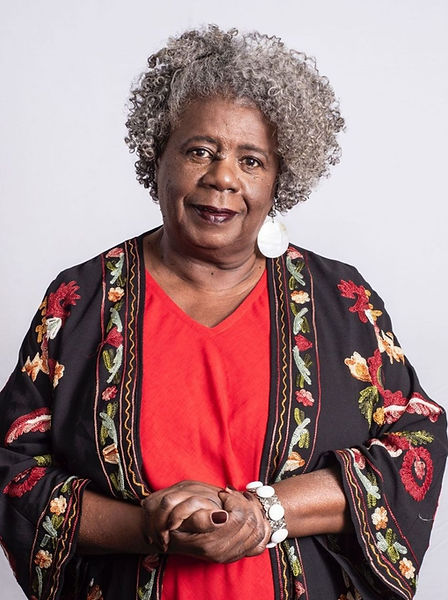
Conceição Evaristo (born 1946) is a Brazilian writer, poet, scholar and one of the most important voices in contemporary Afro-Brazilian literature. Born in Belo Horizonte, she grew up in a working-class family and later moved to Rio de Janeiro, where she worked as a teacher while pursuing her studies.
Her writing explores Black identity, womanhood, racism, poverty, memory, ancestry and social inequality, often centering the experiences of Black women and marginalized communities. Her notable works include Ponciá Vicêncio, Becos da memória and Olhos d'água, which won the Jabuti Prize in 2015.
Evaristo is particularly known for the concept of “escrevivência,” a term she uses to describe writing rooted in lived experience, memory and the collective histories of Black people. Her work has been widely translated and has established her as an influential literary and cultural figure in Brazil and internationally.
Events featuring
this guest

Sunday Sept. 20 2026 • 2:30 PM | Harlem Stage Gatehouse
Black Writing in Portuguese
Conceição Evaristo · João Melo · Dr. Calila das Mercês
The Portuguese-speaking Black world rarely enters the Anglophone Pan-African conversation, though it stretches across Brazil, Angola, Mozambique, Cape Verde, Portugal, and their diasporas. This bilingual conversation considers what happens when Black writers take a language inherited through colonial rule and make it answerable to lives, histories, rhythms, and communities it was never designed to hold.

Sunday Sept. 20 2026 • 6:00PM | Harlem Stage Gatehouse
Keynote: A Literary Life — Conceição Evaristo
Conceição Evaristo · in conversation with Dr. Calila das Mercês
The festival closes with Conceição Evaristo, one of the defining voices of contemporary Black Brazilian literature. Through a bilingual reading and conversation, Evaristo reflects on a literary life shaped by memory, ancestry, women’s lives, community, and escrevivência: writing that emerges from lived Black experience and remains answerable to the worlds that produced it. As the closing keynote, the session gathers the festival’s central questions into one life and body of work: how literature carries the near, how private memory becomes collective history, and how a writer transforms the language of inheritance into a language capable of holding Black life.