
I'm a paragraph. I'm connected to your collection through a dataset. Click Preview to see my content. To update me, go to the Data Manager.
CONVERSATION · NYBALF 2026
Slow Poison
Mahmood Mamdani in conversation with Kọ́lá Túbọ̀sún
September 19, 2026 · Harlem Stage Gatehouse, New York
I'm a paragraph. I'm connected to your collection through a dataset. Click Preview to see my content. To update me, go to the Data Manager.

About the session
How do the categories of colonial rule outlive colonialism? In conversation with Kọ́lá Túbọ̀sún, Mahmood Mamdani discusses Slow Poison, his account of Uganda under Idi Amin and Yoweri Museveni, and explains why, after decades of writing as an academic observer, he wrote himself into the book as its fourth character. He reads his first encounters with Amin at Makerere in 1972 and with Museveni in Dar es Salaam, and answers headlines that presented the book as an apology for Amin.
Mamdani traces how Amin was shaped by the British army and its methods of counterinsurgency, why his rule became popular after the expulsions of 1972, and how colonial distinctions between natives and migrants survived independence across Africa. The conversation moves through V. S. Naipaul's pessimism and an optimism that, in Kampala, had to be willed; Museveni's choice of power over conviction; Israel's long involvement in Uganda's security services; and why American nativism belongs to a different history. In the audience questions, Mamdani discusses generational views of Museveni, a state Pan-Africanism, and his argument that African studies should study the world from an African vantage point.
In their words
“But once I began to bring the stories into the book, I realized that I was part of the story. I was not an external observer. I couldn't claim objectivity. I had to own up to a point of view.”
MAHMOOD MAMDANI · 3:33 ↗
“If you lived in Uganda in that period, optimism had to be willed.”
MAHMOOD MAMDANI · 27:27 ↗
“And I think the human capacity to learn is the premise with which we must begin. Anytime we study anything.”
MAHMOOD MAMDANI · 30:07 ↗
“We are not going to study ourselves separate from the world. We are actually going to study the world from our vantage point because we're part of the world.”
MAHMOOD MAMDANI · 46:48 ↗
“The younger generation will not accept anything else but optimism, but a will to change the world.”
MAHMOOD MAMDANI · 51:14 ↗
Key ideas
Writing from inside the story
Mamdani describes moving from the stance of an impartial academic observer to a book in which he is the fourth character, alongside Amin, Museveni and Julius Nyerere. Once his own stories entered the book, he says, he could no longer claim objectivity and had to own a point of view.
Amin was made, and changed
Mamdani argues that Amin cannot be understood as a fixed character. He traces Amin's recruitment into the British army as a child soldier, his training in counterinsurgency, Western press approval in his first year, and the popularity that followed the expulsions of 1972 and measures on kingship, land and a commission of inquiry.
Native and migrant: the question independence inherited
Colonial rule in Africa, Mamdani says, placed migrants in the most sensitive positions and privileged them over natives, and independence turned that order upside down without changing it. He follows successive answers to the question of who is an African, from the Freedom Charter to Steve Biko, to the present in South Africa.
Optimism had to be willed
Asked about V. S. Naipaul's conviction that Uganda was doomed, Mamdani contrasts a visitor passing through with a resident of Kampala, for whom optimism was an act of will. The idea returns in his final answer at 00:50:20.
Power over conviction
Mamdani rejects the view that Museveni's character was fixed from the start, arguing that both Amin and Museveni learned. He recounts a phone call with Museveni after a student was killed at the university two years after Museveni took power, and describes the turn to the IMF and World Bank as a choice between power and conviction.
The world from our own vantage point
Asked whether his view of African studies has changed, Mamdani describes the programme he built at the Makerere Institute of Social Research, designed to study the world from an African vantage point rather than to operate as an area studies centre, with African language requirements and teaching across Christian, Islamic and pre-Christian knowledge traditions.
Chapters
00:00 Introduction: Mahmood Mamdani and Slow Poison
Kọ́lá Túbọ̀sún introduces Mamdani and the book.
01:50 Why this book, and why now: writing himself into the story
04:27 An apology for Amin? The book against its headlines
06:45 First encounters: Amin at Makerere, Museveni in Dar es Salaam
Mamdani reads from the book.
10:12 Decolonization, and how Amin was made
14:57 Why Amin was popular: kingship, land and a truth commission
20:08 Native and migrant: the colonial question independence inherited
26:33 Naipaul, Kampala and an optimism that had to be willed
28:43 Did Museveni change? Power over conviction
32:23 Reception in Uganda, and Israel's long role
38:05 Is American nativism the same story?
40:40 Audience Q&A: Museveni and the generations, state pan-Africanism
45:11 African studies: the world from our own vantage point
50:20 Closing question: optimism as a will to change the world
Timestamps open the recording on YouTube at that point.
Participants

Featured author
Mahmood Mamdani is the Herbert Lehman Professor of Government and Director of the Institute of African Studies at Columbia University. His books include Citizen and Subject, When Victims Become Killers, Good Muslim, Bad Muslim, Neither Settler nor Native and Slow Poison: Idi Amin, Yoweri Museveni, and the Making of the Ugandan State (2025).

Moderator
Kọ́lá Túbọ̀sún is a Nigerian poet, linguist, translator, filmmaker and publisher. His poetry collections are Edwardsville by Heart (2018), Ìgbà Èwe (2021) and Èṣù at the Library & Other Poems (2024). He founded the YorubaName.com dictionary project and publishes OlongoAfrica. He serves on the NYBALF board.
Photographs


Reading list
Central works
Mahmood Mamdani
Slow Poison: Idi Amin, Yoweri Museveni, and the Making of the Ugandan State
Harvard University Press · 2025
Mamdani's account of Uganda under Idi Amin and Yoweri Museveni, written partly from his own experience of expulsion and return. The book is the subject of the conversation.
MENTIONED BY KỌ́LÁ TÚBỌ̀SÚN AT 00:26 ↗ · PUBLISHER ↗
Works referenced in the session
Mahmood Mamdani
Citizen and Subject: Contemporary Africa and the Legacy of Late Colonialism
Princeton University Press · 1996
Mamdani's study of the bifurcated colonial state in Africa, mentioned in the introduction and underlying the conversation's account of native and migrant.
MENTIONED BY KỌ́LÁ TÚBỌ̀SÚN AT 00:01 ↗
Mahmood Mamdani
Neither Settler nor Native: The Making and Unmaking of Permanent Minorities
Belknap Press of Harvard University Press · 2020
Mamdani on the nation-state and the political production of permanent minorities. Mentioned in the introduction.
MENTIONED BY KỌ́LÁ TÚBỌ̀SÚN AT 00:19 ↗
Mahmood Mamdani
From Citizen to Refugee: Uganda Asians Come to Britain
1973
Mamdani's first book, an account of the 1972 expulsion of Asians from Uganda, which he describes in the conversation as a book on being expelled.
MENTIONED BY MAHMOOD MAMDANI AT 01:59 ↗
Paul Theroux
Sir Vidia's Shadow: A Friendship Across Five Continents
1998
Theroux's memoir of his friendship with V. S. Naipaul, which Túbọ̀sún cites on Naipaul's pessimism about Uganda.
MENTIONED BY KỌ́LÁ TÚBỌ̀SÚN AT 26:33 ↗
Mahmood Mamdani
“The African University”
London Review of Books · 2018
Essay on the colonial origins of the African university and the debates at Makerere and Dar es Salaam. Raised by an audience member during the questions.
MENTIONED BY AN AUDIENCE MEMBER AT 45:20 ↗ · PUBLISHER ↗
Ali A. Mazrui
The Africans: A Triple Heritage
1986
Mazrui's account of Africa's indigenous, Islamic and Western inheritances, which Mamdani cites when describing the question "What is African knowledge?"
MENTIONED BY MAHMOOD MAMDANI AT 49:32 ↗
Further reading
Recommended by NYBALF. Not discussed in the session.
Mahmood Mamdani
Define and Rule: Native as Political Identity
Harvard University Press · 2012
Mamdani's lectures on how indirect rule defined colonised people as natives by tribe. Recommended for readers following his account of Museveni's return to a version of indirect rule.
Mahmood Mamdani
When Victims Become Killers
2001
One of Mamdani's earlier books, named in the introduction to the session.
Mahmood Mamdani
Good Muslim, Bad Muslim
2004
One of Mamdani's earlier books, named in the introduction to the session.
Kọ́lá Túbọ̀sún
Edwardsville by Heart
2018
Túbọ̀sún's first poetry collection.
Emily R. Grosholz
Ìgbà Èwe: Translated Poems of Emily R. Grosholz
Translated by Kọ́lá Túbọ̀sún · 2021
Túbọ̀sún's Yorùbá translations of poems by Emily R. Grosholz.
Kọ́lá Túbọ̀sún
Èṣù at the Library & Other Poems
2024
Túbọ̀sún's most recent poetry collection.
Read the transcript
Read the complete session in its edited transcript.
READ TRANSCRIPT (PDF, 16 pages) ↗
Continue exploring
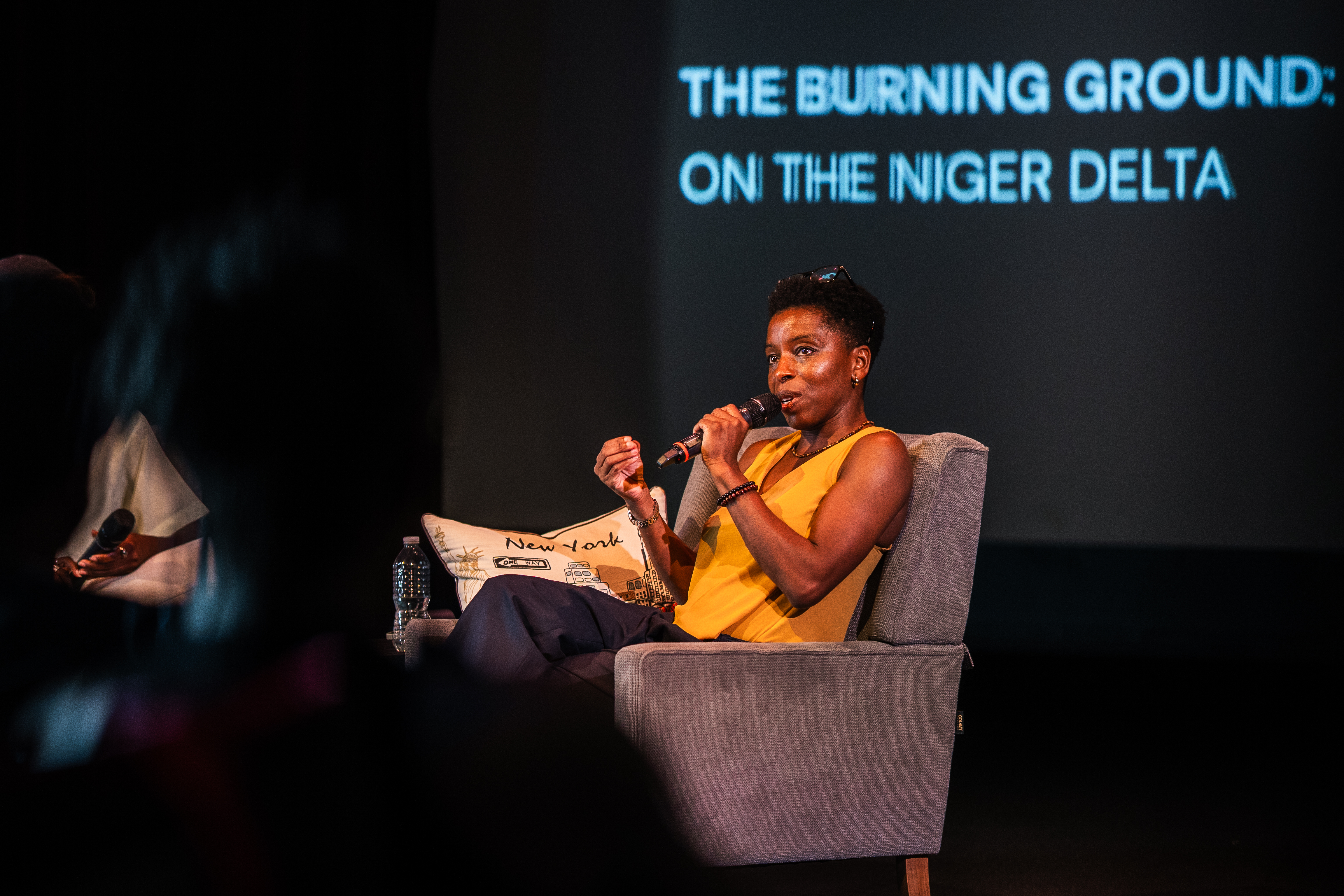
CONVERSATION · NYBALF 2026
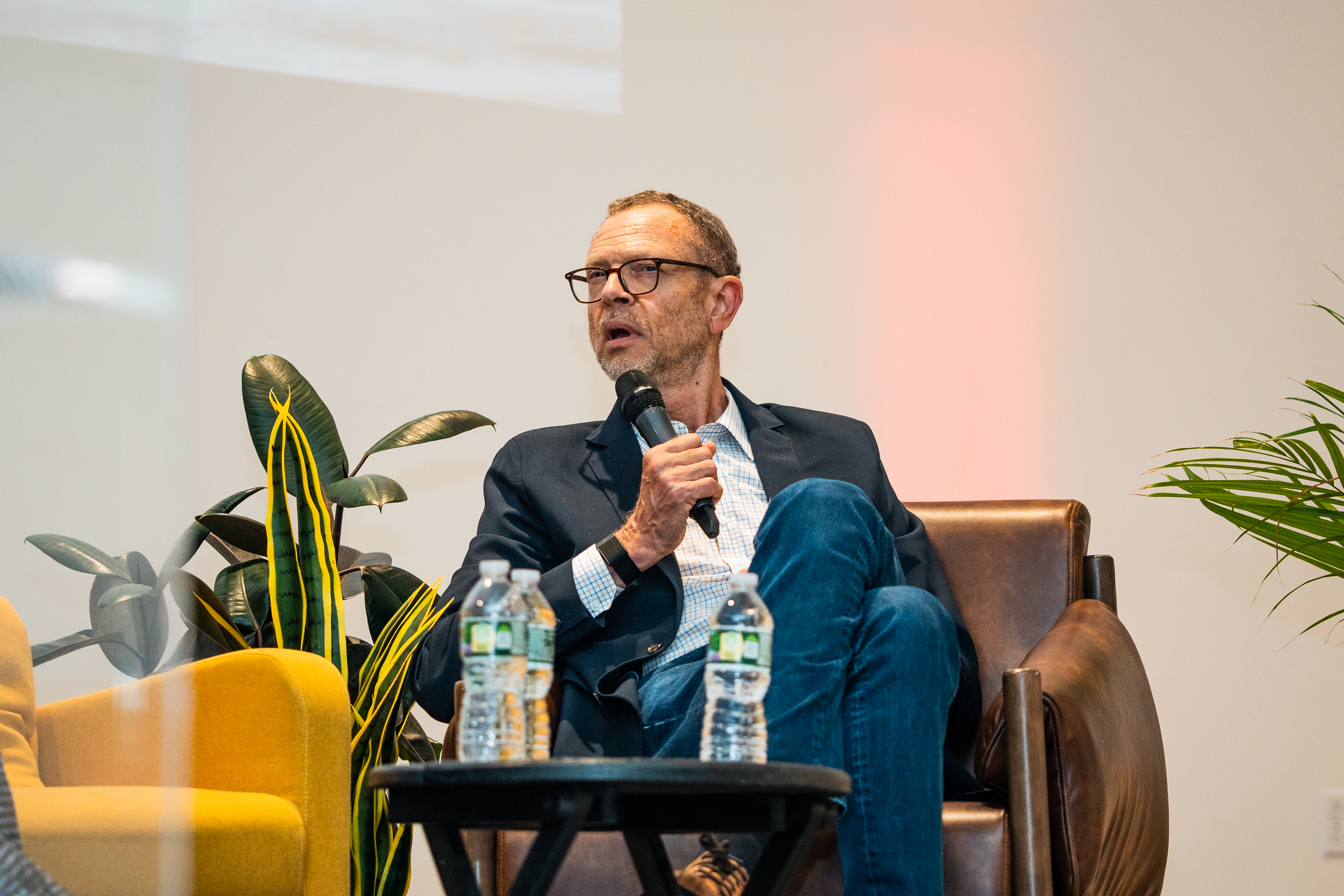
KEYNOTE · NYBALF 2025
Howard W. French in conversation with Kọ́lá Túbọ̀sún
Presented by Harlem Stage. Supported by the Open Society Foundations.